Village in the Shade Review — A Dark Twist on Farming Sims
Village in the Shade is a farming simulation from Nippon Ichi Software's Yomawari team that dares to blend cozy countryside life with genuine psychological horror, set in a secluded Japanese mountain village governed by eight mysterious rules. It is a bold genre experiment that largely succeeds — delivering satisfying agricultural gameplay by day and genuinely unsettling exploration by night.
Gameplay — Familiar Farming With a Slow-Burn Payoff
At its core, Village in the Shade offers a traditional farming sim loop: till soil, plant crops, water daily, raise livestock, fish, mine, hunt, and forage. With over 80 crops and flowers to grow, a five-tier crop quality system, and more than 1,500 craftable and decorative items, the sheer volume of content is impressive. The hunting mechanic — using traps or a bow and arrow to take down animals ranging from squirrels to boars and bears — is a welcome addition rarely seen in the genre and helps distinguish the daytime gameplay from its peers.
However, players should brace for a slow start. The first couple of hours are heavy on dialogue and tutorial sequences, and the game does not truly open up until roughly the ten-hour mark. Early on, the farming activities can feel bare-bones, but persistence is rewarded as crop quality upgrades, a skill tree powered by collectible Magatamas, binder completion challenges reminiscent of Stardew Valley's Community Center, and expanded farm-building options gradually reveal themselves. The pacing mirrors the deliberate storytelling traditions of Japanese rural life sims like Doraemon Story of Seasons — rewarding for patient players, but potentially frustrating for those who want immediate freedom.
A notable caveat concerns the controls. Mouse and keyboard input feels unintuitive — there are no number-key hotbar shortcuts, and furniture placement requires holding Shift the entire time. Switching to a controller dramatically improves the experience, and it is clear the game was designed with gamepad input in mind. Prospective PC players should strongly consider using a controller for the best experience.
Atmosphere and Art — Where Cozy Meets Creepy
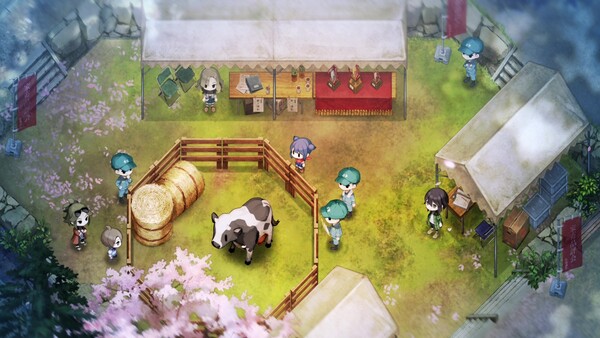
Village in the Shade is a visually striking game. The Yomawari team's signature art style shines here, combining adorable chibi character models with lush, hand-drawn environments that evoke the watercolor warmth of rural Japan. The contrast between the sun-drenched fields of daytime Kagatsu Village and the oppressive darkness that descends after curfew is masterfully handled. Kazuya Takasu's soundtrack, informed by their work on Shin Hayarigami, elevates both halves of the experience — serene pastoral melodies give way to tense, unsettling compositions that make every nighttime outing feel genuinely risky.
The horror elements themselves lean more toward psychological tension than outright terror. Breaking the village's rules triggers subtle, escalating disturbances: knocking at your door that varies in speed and intensity, shadows creeping across your home, and spectral figures wandering the village streets. There are occasional jump scares — sudden birds flying at the screen, unexpected creature encounters — and the game does feature blood and disturbing imagery. It is not the scariest game on the market, but the atmosphere is persistently uneasy, and the contrast against the daytime tranquility makes both halves more effective.

Story and the Rules System — The Heart of the Experience
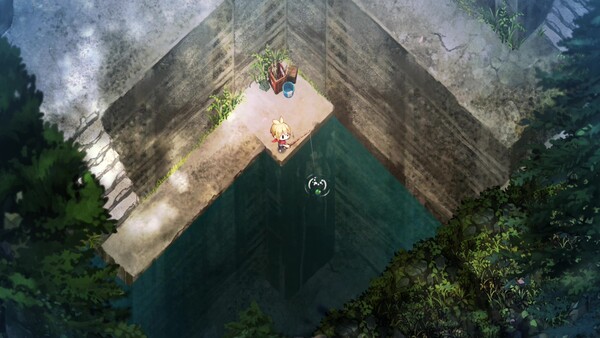
You play as a nameless orphan who literally falls into Kagatsu Village through a giant sinkhole and is offered shelter in exchange for becoming a productive member of the community — and obeying its eight rules. These rules, including the 11 PM curfew, prohibitions against approaching strangers, and warnings about answering voices from the mountains, form the central tension of the game. Follow them, and life proceeds peacefully. Break them, and the game shifts into full Yomawari horror mode, revealing the dark secrets that the village is desperate to keep hidden.
The narrative is compelling precisely because progression requires you to violate the rules that keep you safe. Night exploration unlocks from Spring 14 in Normal Mode, opening up new story threads, ghostly encounters, and collectible Magatamas that fuel your skill tree. The writing successfully builds mystery around why Kagatsu Village has so many taboos, and the gradual revelations provide strong motivation to push through the horror sections. Seven of the eight rules have been documented by the community; the final rule is intricately tied to the story's climax.
Before your first planting session, the game asks you to choose between Normal Mode and Peaceful Life Mode — a permanent, save-locked decision. Peaceful Life Mode strips out all horror content and forces you to sleep at 11 PM, offering a pure farming experience. While this is a thoughtful accessibility option, it removes the main story, all endings, and roughly half of the game's identity. For most players, Normal Mode is the definitive way to experience Village in the Shade.
Content Depth and Replayability
Village in the Shade offers a substantial amount of content for a farming sim. The combination of 80-plus crops with a five-tier star quality system, mutant giant crops grown through specific soil-seed combinations, a full livestock system with chickens, cows, sheep, and ducks, seasonal quality contests, and an extensive crafting catalog ensures that the agricultural side alone can absorb dozens of hours. Add to that the hunting system, fishing across multiple locations, mining, and a bulletin board with time-limited requests, and the daily routine stays engaging across multiple seasons.
The 52 Steam achievements require mastery of both the farming economy and the survival-horror exploration, providing a compelling completionist challenge. Multiple endings tied to story progression and rule-breaking decisions add genuine replay value, though the inability to switch between Normal and Peaceful Life modes on the same save file means you would need a separate playthrough to experience the alternative mode. The game supports up to three save files, which accommodates this well.
Final Verdict — Should You Buy Village in the Shade?
Village in the Shade is a genuinely unique entry in the farming sim genre. Nippon Ichi Software's Yomawari team has successfully merged the comforting rhythms of rural life simulation with a slow-building psychological horror framework that feels organic rather than gimmicky. The art direction is gorgeous, the atmosphere is expertly crafted, and the rules system provides a narrative hook that most farming games simply lack. Its Japan launch moving over 100,000 copies in the first week speaks to the strength of its concept.
The game is not without its drawbacks. The opening hours are excessively slow, the mouse-and-keyboard controls feel like an afterthought, and the English language interface was not available at the Japanese launch — prospective Western buyers should note that the English localization arrives with the Fall 2026 worldwide release from NIS America. The language you select is also locked to a specific save file, meaning you cannot switch languages without starting over. Despite these friction points, Village in the Shade is an easy recommendation for fans of farming sims who crave something with more narrative weight and atmospheric tension. If the idea of tending your crops by day and cautiously exploring a haunted village by night appeals to you, this is one of the most memorable experiences the genre has produced.
Village in the Shade is available on PC (Steam), PlayStation 5, Nintendo Switch, and Switch 2. The game is priced at ¥8,200 for PS5, Switch 2, and PC, and ¥7,200 for the original Switch in Japan, with Western pricing to be confirmed alongside the Fall 2026 English release.